
Rebrand or refresh? How to know which one you actually need.
There is something very exciting about a new logo. The reveal, the new signage, the fresh website, the feeling that the business has turned a corner. I do this for a living and I still feel it.
But I see a lot of businesses go all in on a brand new name and look, and I have two very different reactions. Sometimes it is obviously the right call. The business looks more professional, trustworthy, and ready for whatever it is growing into. Other times I look at it and think: that is a completely new identity, did they need to go that far? What was actually wrong with the old name? Maybe all they needed was a refresh.
Before you undergo what could be a huge change, it is worth understanding the difference…
Instagram just gave us a very good example
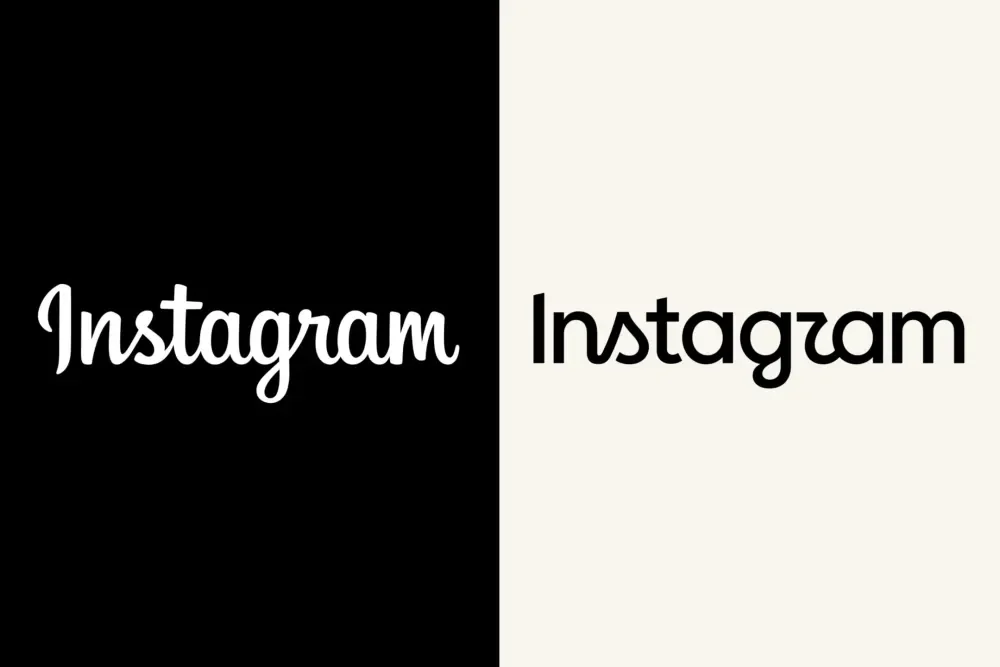
In August 2026, Instagram changed its wordmark for the first time in a decade. The cursive mark sitting at the top of the app since 2016 was replaced with something bolder and more compact: still script, still with a handmade feel, just sharper.
For what it is worth, I like it. The old cursive had drifted into dated territory, which happens to almost everything after ten years. What I like about the new one is that it did not run all the way to the other end and land on a clean, contemporary, tech-company sans serif, which is where most brands go when they want to look current. It kept a touch of that script flair. It still feels like Instagram, just a version of Instagram that belongs in 2026.
This is the part I find most interesting though, almost every article called it a rebrand except for Instagram. Adam Mosseri, who runs the platform, said it was time for a refresh. The name did not change. The camera icon did not change. The gradient did not change. The strategy did not change. They updated how the brand is expressed and left the equity alone.
That is a refresh. A very large, expensive, well researched refresh, but a refresh.
So what is the actual difference?
A refresh keeps what you have built and updates how it is expressed. The name stays. The things people recognise you by stay. What changes is everything that has aged: the logo gets redrawn or modernised, the colours might soften, the typography gets sorted out, the website gets rebuilt, the photography gets replaced, and the brochures and banners stop looking like they were made in three different years by three different people. From the outside it can look dramatic. Underneath, the business is still saying the same thing about itself.
A rebrand changes what the brand is. New positioning, often a new name, a new story, and sometimes a new audience. It starts with strategy, not design.
Rebrand or Brand Refresh: Questions to ask
If you are trying to work out which path to take, start with these six questions:
1. How well known are you in your sector?
If you already have a good reputation and a solid referral base, but look like a twenty year old company, that is a refresh. A more modern logo, an updated website (worth doing every three to five years regardless), collateral that matches, a bit of an office glow up, and new professional photography. Recognition is an asset. Do not throw it out.
2. Has the business itself actually changed?
Merger, acquisition, new services, a market you no longer serve, or a market you now do. If what you sell and who you sell to has genuinely shifted, the brand needs to shift with it. That is rebrand territory.
3. Is your name still doing its job?
Can people say it, spell it, find it? Does it still describe something true about you? If your name says "Adelaide Mobility Aids" and you now deliver clinical services nationally, that is a real constraint.
4. Do you have a new vision for the organisation?
Sometimes what got the business here is not what will take it forward. New leadership, a new strategic plan, or a new sense of what the organisation is for. A brand process is a very good vehicle for making that vision concrete, and for getting your own team to understand it.
5. Where did your current identity come from?
Most businesses start with the logo they could afford at the time, and there is nothing wrong with that. A DIY logo, a cheap outsourced job, or a "that will do for now" that then did the job for a few years. It got you here. The question is whether it is still working. Your existing clients stay because they know you and trust the work. New clients do not have that. They have your website and your logo, and they make a judgement in about four seconds. If the identity is quietly telling them you are smaller or less established than you actually are, it is costing you work you never hear about.
6. What would actually change for your customer?
If you cannot answer this, you are probably solving an internal problem with an external tool.
A rough rule of thumb when it comes to a rebrand or brand refresh…
If the business is fundamentally the same business and it just looks older than it is (visually), you need a refresh.
If the business has genuinely changed, or is about to, you need a rebrand, and you need to start with the strategy rather than the logo.
If you are not sure, it is usually a refresh.
Still not sure?
I would love to talk it through with you. Sometimes half an hour of honest conversation is enough to work out which one you are dealing with…